
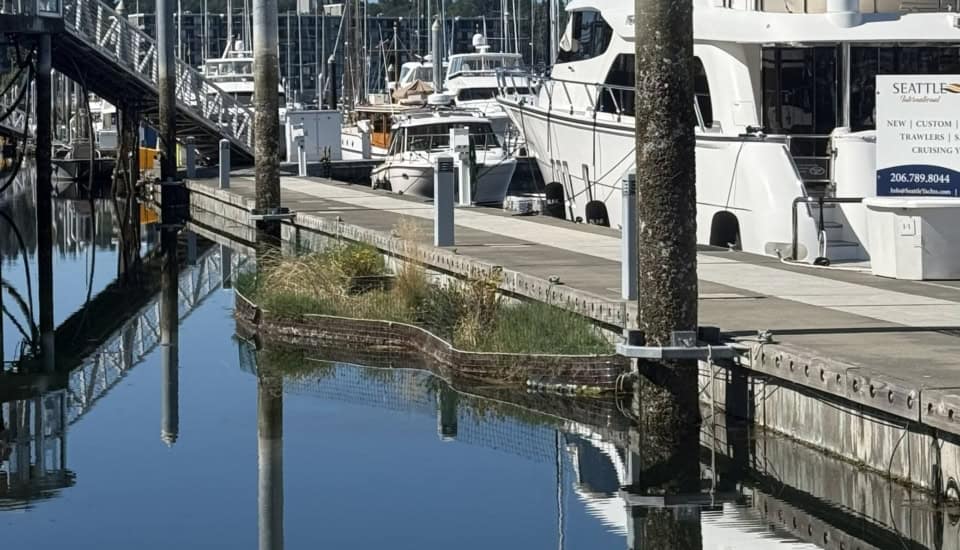
A floating wetland research project at Shilshole Bay Marina is showing encouraging early results as researchers study whether the first marine floating wetland of its kind in Seattle can help restore habitat for juvenile salmon along the city’s urban shoreline.
The project, led by the University of Washington’s Green Futures Research and Design Lab in partnership with EarthCorps, has been installed along a dock at Shilshole Bay Marina since 2022 to test whether floating wetlands can survive in saltwater while providing habitat for fish.
The system consists of 10 connected floating wetland units planted with native vegetation, including two submerged sections planted with eelgrass to provide refuge for fish. The wetlands are positioned between a marina dock and the rip-rapped shoreline near a stormwater outfall, where traditional shoreline restoration is not possible.
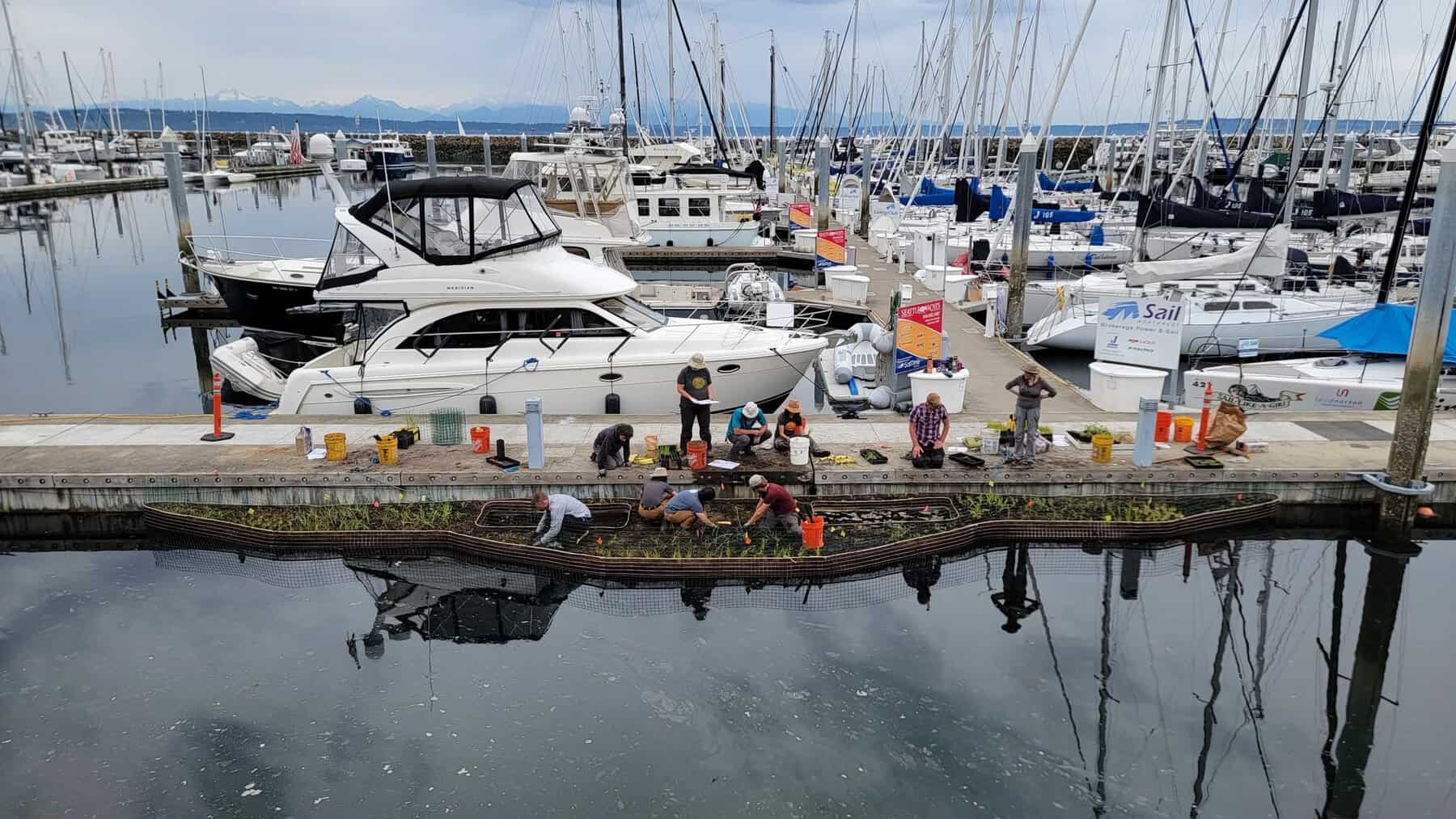
Researchers are monitoring fish activity, plant health and survival, and potential water quality benefits.
According to the Green Futures Lab, current findings suggest the floating wetlands are supporting fish populations, though their effectiveness for juvenile salmon may improve as the habitat matures and develops a more established ecological structure. Stickleback are currently the most common fish species observed beneath the wetlands, while juvenile salmon have been seen in varying numbers each year.
In reporting by KING 5, University of Washington researchers said they have observed more juvenile salmon around the floating wetland than at a nearby control site without floating wetlands. Researchers also told the station that the plants are thriving as the study continues.
Researchers say continued monitoring will be needed to better understand the long-term effects on salmon habitat and use.
The project has also identified several plant species that have performed well in the marine floating wetland environment, including Salicornia pacifica, Jaumea carnosa, Distichlis spicata and Potentilla anserina, making them potential candidates for future floating wetland projects in Puget Sound.
In addition to the floating wetlands, researchers have installed four sets of suspended “Shelter Shells” beneath the dock. The shells are submerged at different tide levels and are being studied to determine whether they can increase habitat for invertebrates, creating additional food sources for migrating juvenile salmon.
The Green Futures Lab says the floating wetland can be viewed from the marina walkway at Shilshole Bay Marina.
The floating wetland is located in an area where marine wildlife is commonly observed, including the seasonal sea lion gatherings at Shilshole Bay Marina.
Featured photo by UW Green Futures Lab