
In March of 2008, five people were lost and 42 rescued from the Seattle-based fish processing vessel, the Alaska Ranger, which sank approximately 130 miles west of Dutch Harbor, Alaska.
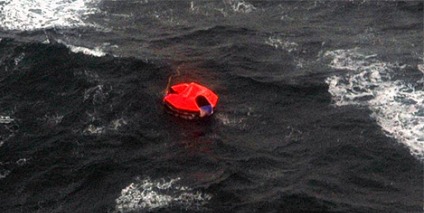
A Coast Guard photo of one of the life rafts.
The Coast Guard has now determined the cause of the sinking:
The Board determined that the cause of the sinking was flooding that likely started in the rudder room, but rapidly progressed to the engine room and other spaces due to a lack of watertight integrity.
While the exact source of the uncontrolled flooding remains unknown, a thorough analysis of the facts indicates the most likely source was related to the vessel’s poor material condition and may have been related to the Kort nozzle struts. The struts support the nozzles shrouding the propellers at the stern of the vessel and are believed to have experienced excessive stresses where they were attached to the vessel’s hull.
The Board concluded that the Fishing Company of Alaska failed to properly maintain the structural condition of the Alaska Ranger. Evidence of extensive and repeated fracturing of the nozzle struts and structural failures in the aft ballast tanks and potable water tanks went unaddressed.
At the time of the sinking, ABC News interviewed a survivor who says the crew called it the “Ranger Danger” because the employer had delayed making repairs.
After the tragedy, which four crewmembers died and one remains missing but presumed dead, the Coast Guard took action. “Based on its findings, the Board made 37 recommendations that address the lack of comprehensive safety regulations for fishing vessels, facilitate the consistent application of existing regulations and correct shortcomings in the ACSA (Alternate Compliance Safety Agreement) program that existed at the time of the casualty.” The Coast Guard also released two marine safety alerts. The first “emphasized the need for vessel owners, operators and masters with controllable pitch propellers to understand the design and operation of their system,” according to the report. The second “urged owners and operators to take immediate action to ensure the watertight integrity of their vessels.”