
Ten years after the city’s neighborhood plans were published, residents have been asked to help create a “status check” on how well the 20-year plans are progressing — and whether they need an update. Thursday evening a group of Ballard and Crown Hill residents gathered around a table at the Phinney Center to provide the city with feedback on the draft copy of the status report (.pdf).
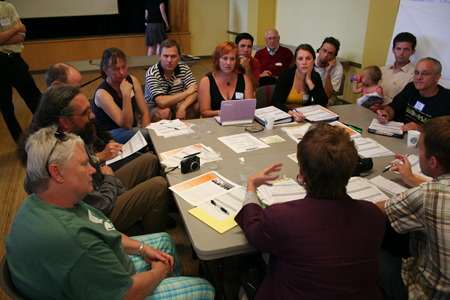
“(Ballard) is a totally different place than it was ten years ago,” said Craig Benjamin, explaining that he’s disappointed that the city’s draft status report fails to adequately explain the dramatic change in the neighborhood. “When the basis of a plan changes so dramatically, you need to reevaluate where you’re going,” added Peter Locke. Others agreed that the neighborhood’s transformation from a “sleepy fishing village” to a high-density community has introduced new priorities around affordable housing (“Ballard just isn’t affordable”), transportation (“Metro buses are packed”), safety and other city services. Another added that “Crown Hill is the red-headed stepchild” when compared to Ballard’s neighborhood improvements. Representatives from the Seattle Planning Commission and the Neighborhood Planning Advisory Committee took notes as neighbors provided their feedback.
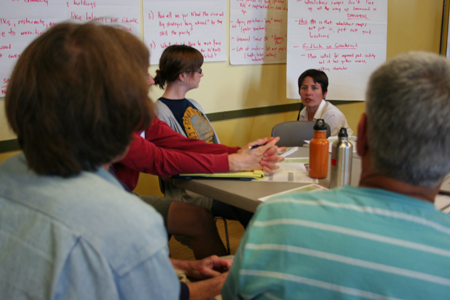
The report reviewed the plan’s original strategies: 1) create a Ballard municipal center with a park, library and service center 2) extend the Burke-Gilman trail through Ballard 3) acquire Crown Hill school and develop the facility into a community sports field complex and 4) establish a location for a commuter rail station. As the report explained, the first is complete and the next two are underway, but a light rail station is currently not planned for the neighborhood. Several residents suggested that the city make the neighborhood plans more flexible to adapt to new challenges and opportunities.
If you were unable to attend the meeting, you can fill out an online survey with your thoughts about the neighborhood and the status report. In October, the city will hold public meetings to review the updated status reports, and then they’ll be presented to the mayor and the city council to consider.