

In an effort to improve salmon stocks, an underwater sound device has been installed at the Ballard Locks to keep seals away from the fish ladder.
A group of partners—including the U.S. Army Corps of Engineers, Oceans Initiative, Long Live the Kings, University of St Andrews, Genuswave, Puget Sound Partnership, Washington Department of Fish and Wildlife, Muckleshoot Indian Tribe—worked to create the Targeted Acoustic Startle Technology (TAST) which has been deployed on the west side of the Ballard Locks. The intended use is to deter seals and protect salmon as they attempt to reach the Lake Washington Ship Canal through the fish ladder.
“Seals and sea lions are known to linger at this migration bottleneck and consume large numbers of salmon returning to the spawning grounds. If successful, the device may help recover dwindling salmon runs, without harming marine mammals,” a press release from Long Live the Kings explains.
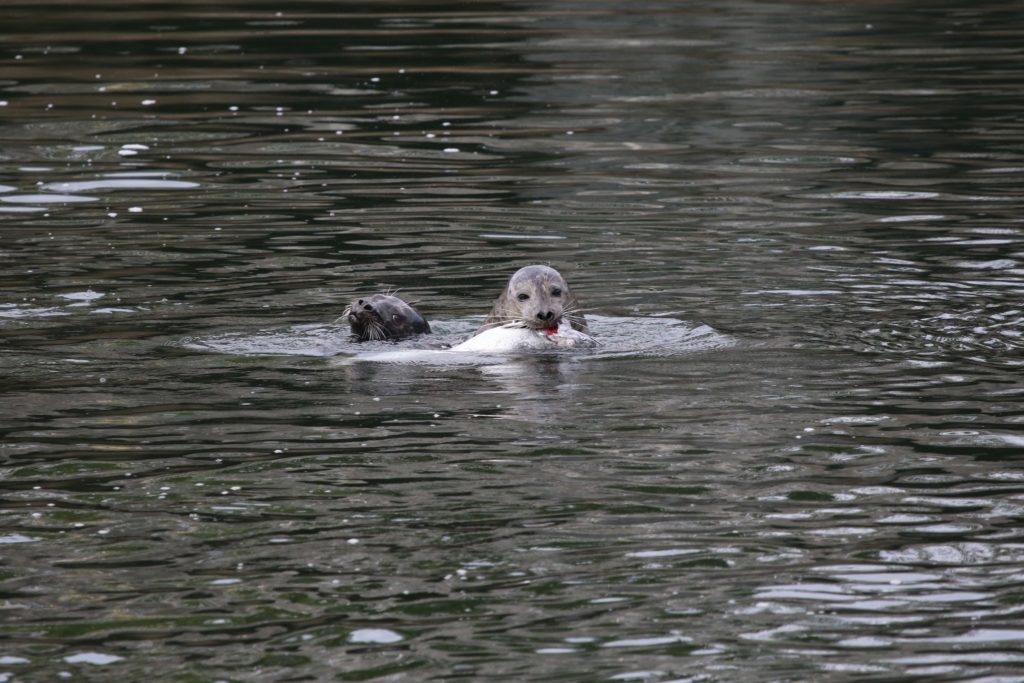
The locks migration bottleneck makes for an easy salmon dinner for seals, but the TAST will hopefully change that.
Scientists from the Seattle-based conservation research nonprofit Oceans Initiative will be monitoring the summer and fall salmon migration and the effectiveness of the sound device.
“Everyone at Oceans Initiative is excited to see whether this benign use of acoustic technology can protect endangered salmon, without harming seals,” scientist Laura Bogaard said. “During the first week of observing with the TAST on, it feels like the seals have shifted away from the fish ladder compared to observation days when the TAST was off. We are keen to see if this observation is also reflected in our data when it comes time for analysis.”
Depending on the effectiveness of the device, it may be deployed in other areas prone to heavy salmon predation. The TAST being used at the locks emits sound at volumes that won’t harm either seals or sea lions, and at frequencies outside the hearing range of salmon and other marine animals, including orcas.
The Ballard Locks are still closed to pedestrians, but when it reopens, visitors may be able to see the device in action or see scientists observing seals and sea lions.
Photos: Laura Bogaard, Oceans Initiative