
By Elizah Lourdes Rendorio, UW News Lab
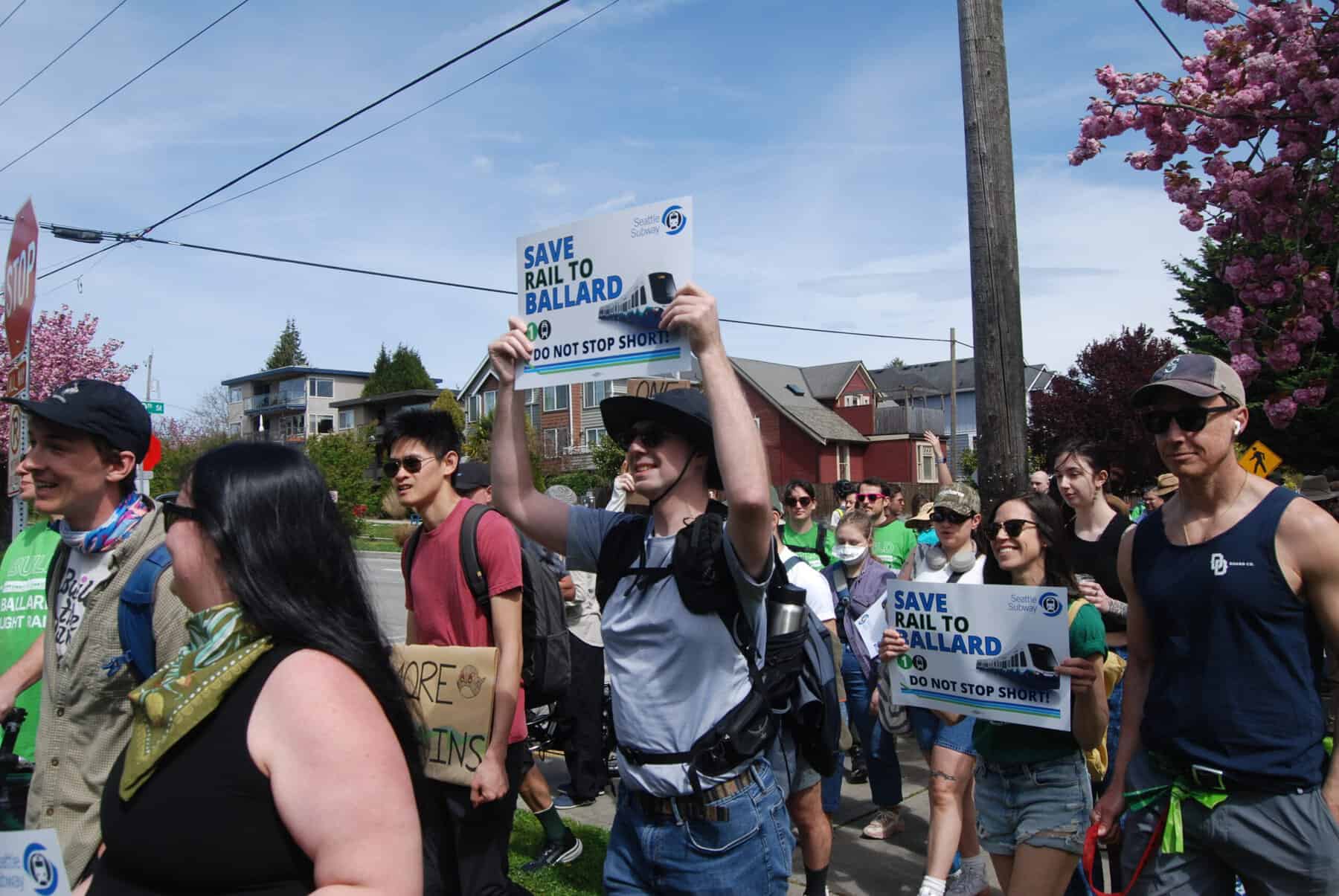
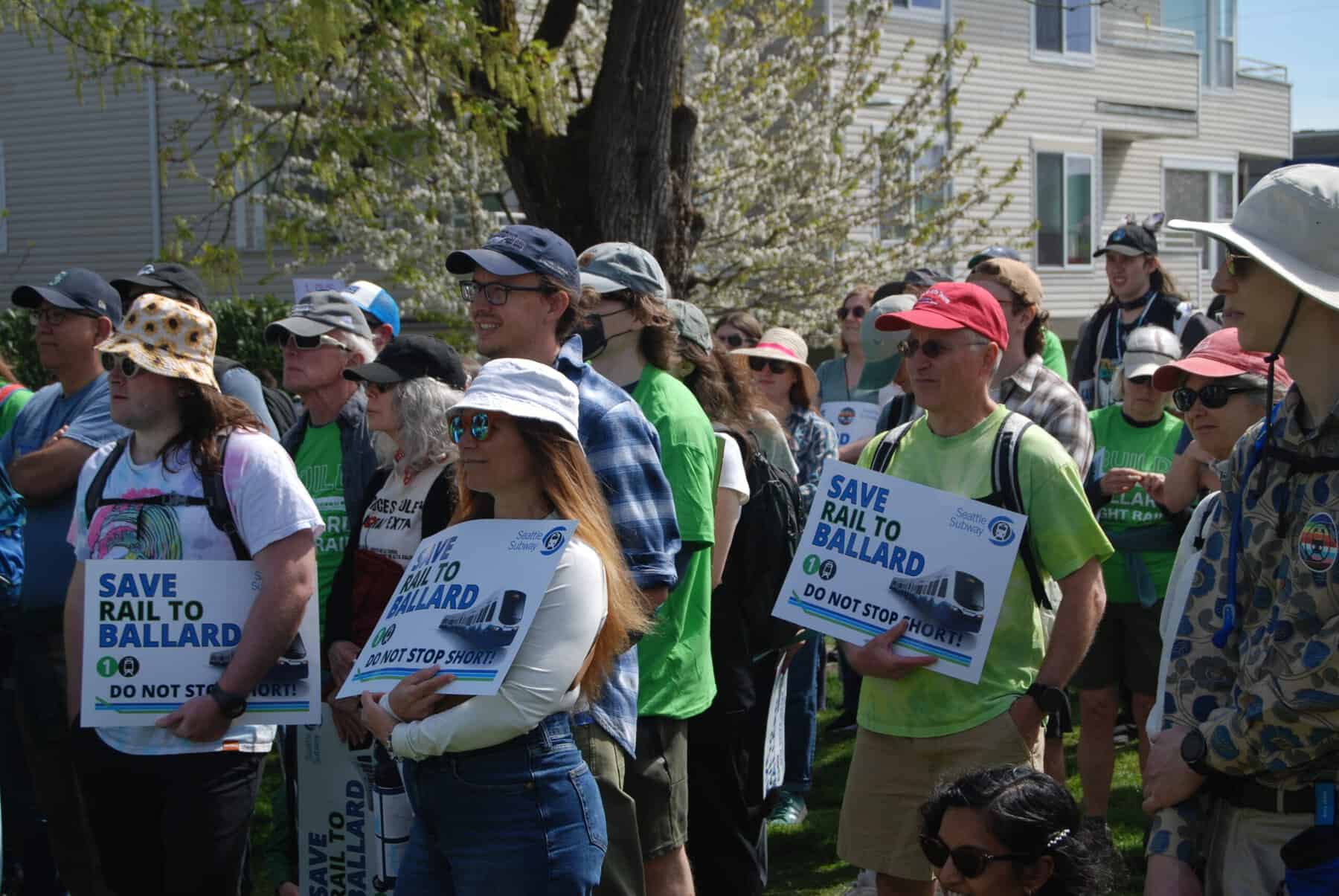
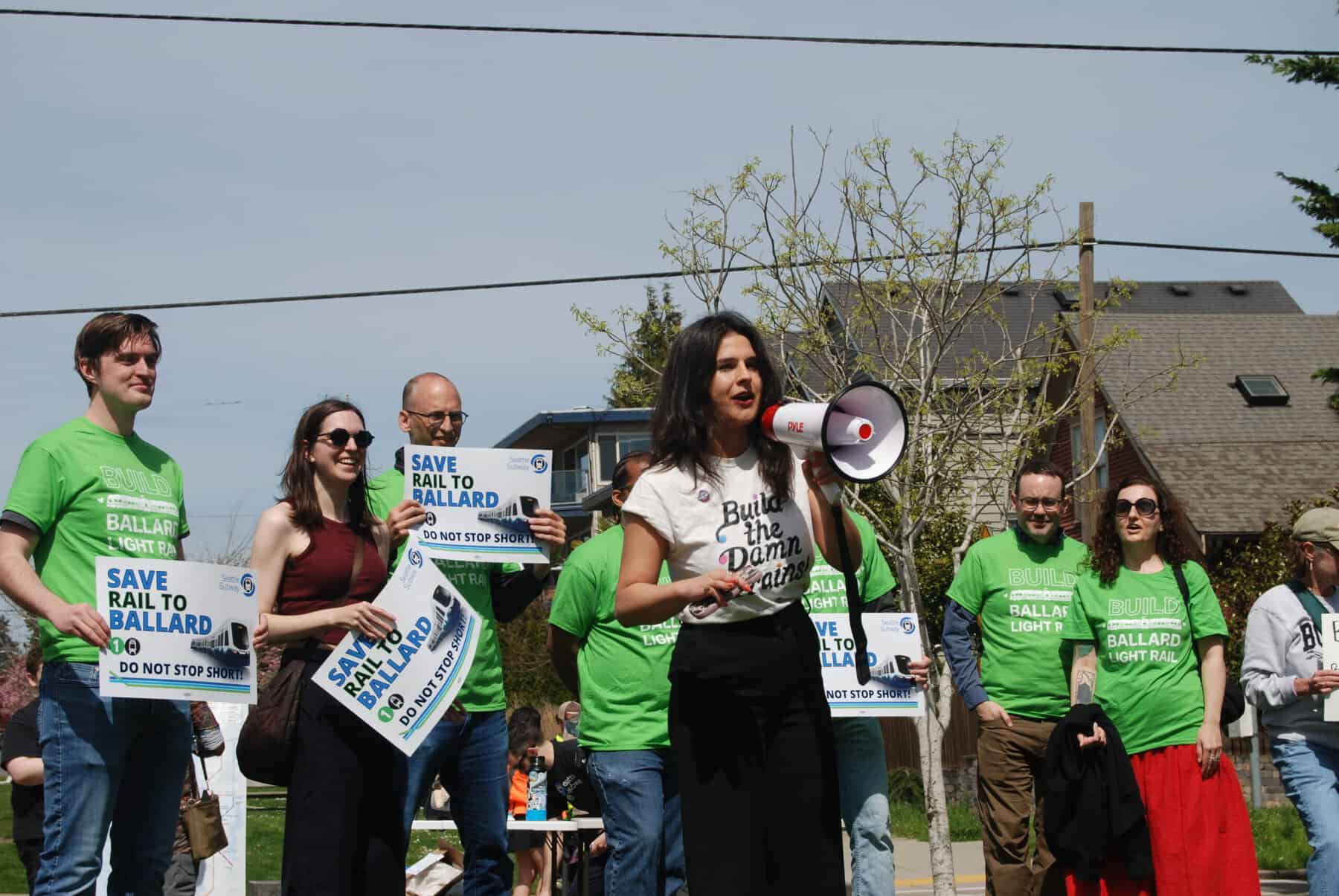
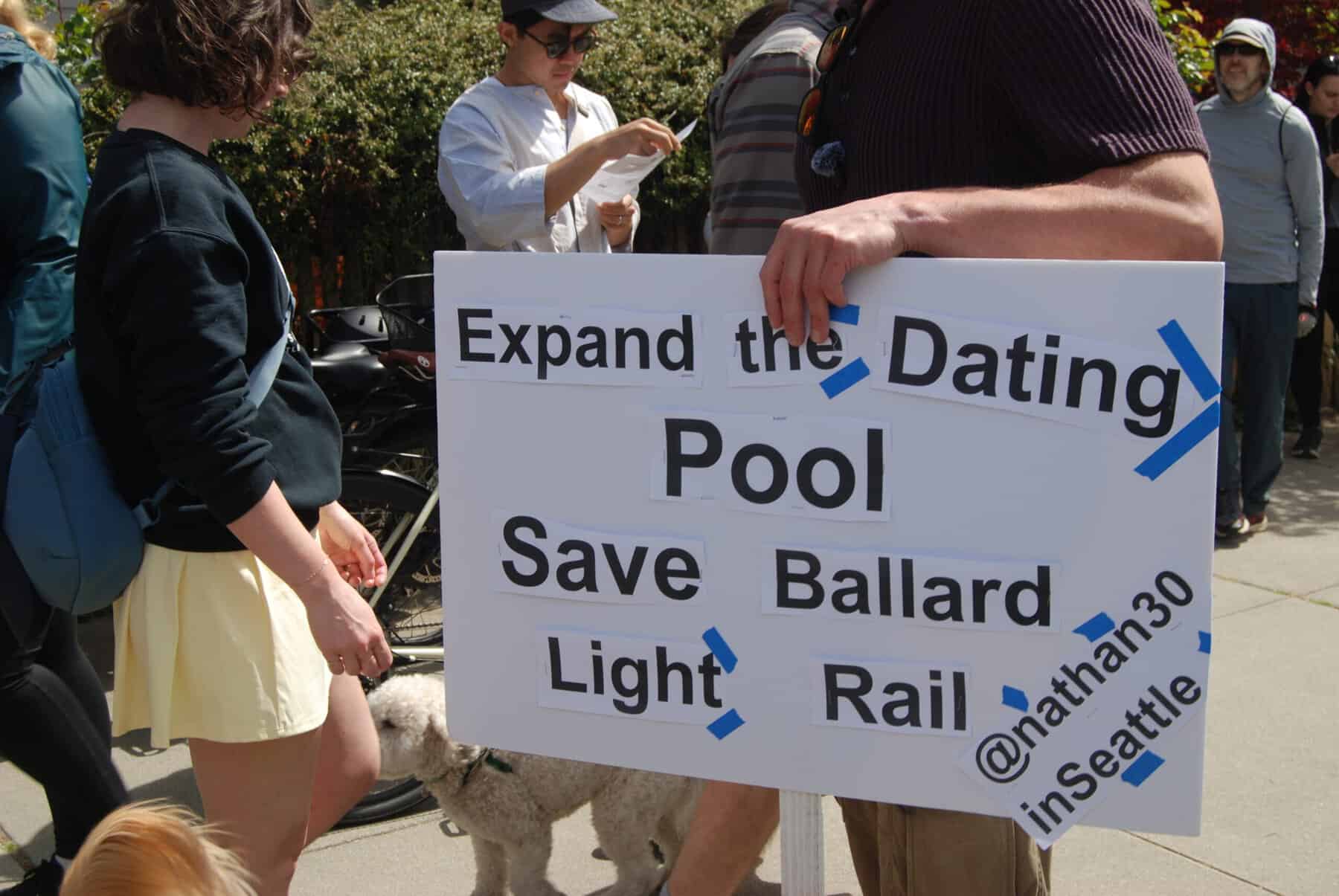
More than 350 Ballard residents gathered at Gemenskap Park April 19 to protest Sound Transit’s possibility of delaying the Link light rail extension into Ballard and surrounding areas.
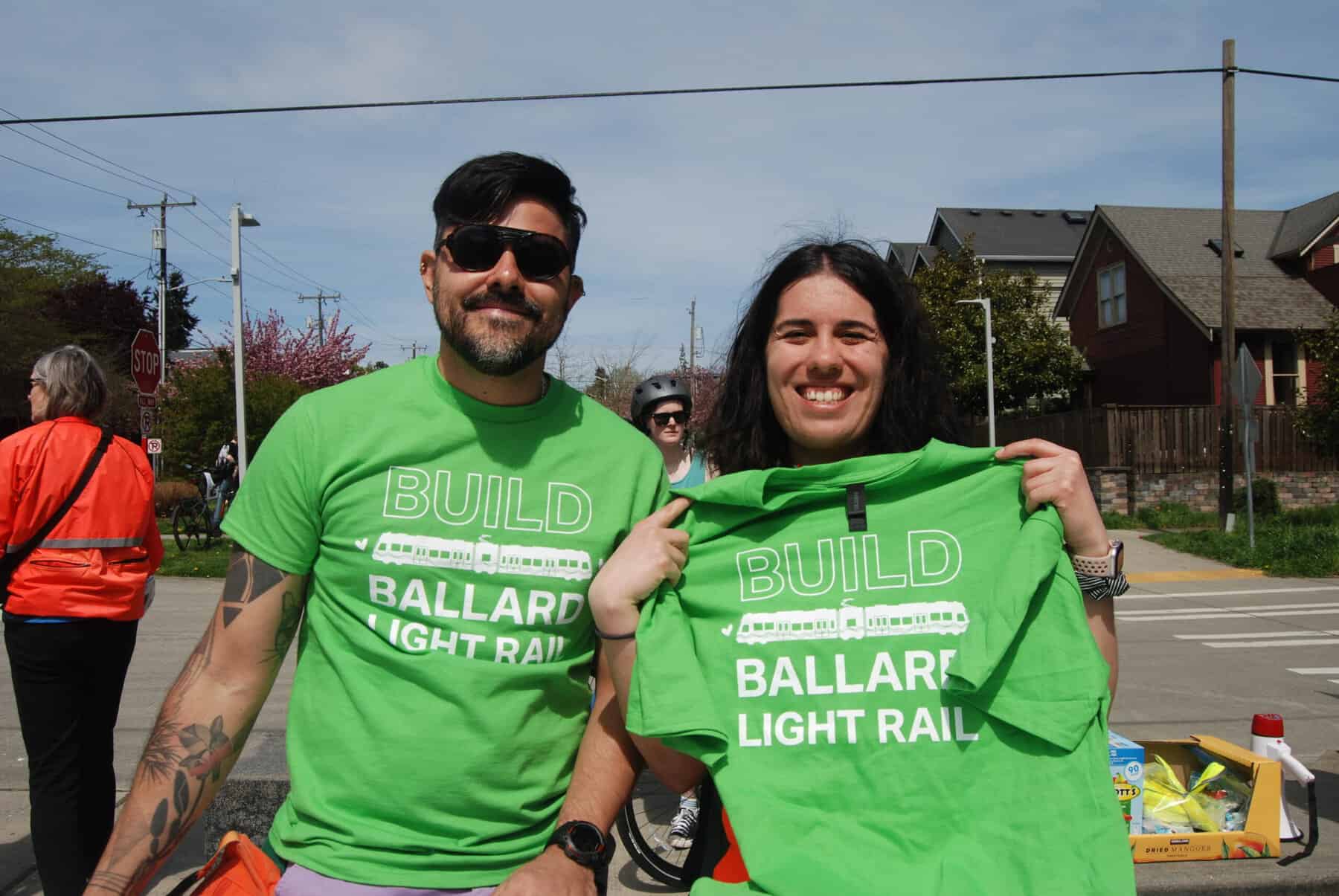
Save Ballard Rail, a community-led group, spearheaded the protest in partnership with grassroot organizations, Seattle Subway, and Ballard Fremont Green Streets. Protesters marched along the proposed light rail route to Smith Cove, advocating for the agency to complete the Sound Transit 3 package in full.
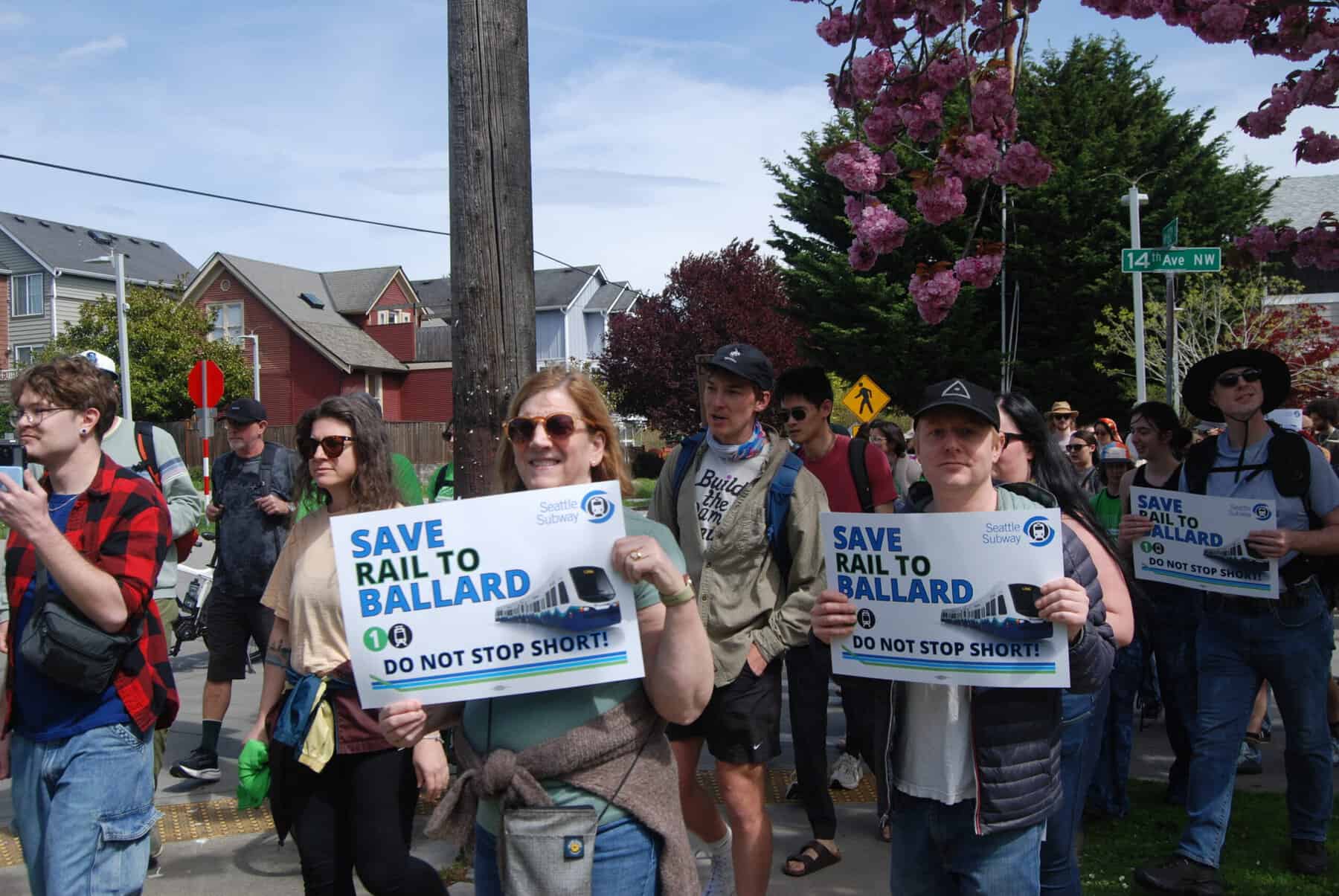
Elected city officials were also in attendance, including state Sen. Noel Frame, Seattle city council member Alexis Mercedes Rinck, and King County council member Jorge L. Barón.
“We’re all here today to show that stopping short of what voters were promised is completely unacceptable,” Seattle Subway board president David Scott said in a speech early in the afternoon.
The ST3 package was approved by voters in a 2016 ballot measure, aiming to improve and expand Puget Sound’s mass transit system by extending the light rail to connect West Seattle, Tacoma, Everett, Redmond, Kirkland, and Ballard. The Ballard Link extension would connect Ballard to Seattle Center, South Lake Union, and downtown with nine new stations.
The ballot measure also approved raising the sales and use tax, property tax, and the motor-vehicle excise tax in order to fund the project.
However, the Ballard extension line budget has since ballooned from $12 billion to over $20 billion amid an agency-wide $34.5 billion budget deficit. Sound Transit projected the Ballard line to have the highest ridership out of ST3, carrying an estimated 132,000 riders to 173,000 daily.
Last month, Sound Transit revealed three potential cost-saving scenarios to address budget constraints, all of which place Ballard stations on the chopping block. According to the agency, a new approach is needed for the project to be fiscally viable throughout the 2030s as ST3 critics fear additional tax hikes.
Light rail advocates contend that deferring any part of the ST3 project is unacceptable as locals continue to pay taxes despite seeing limited progress.
“People are paying for a service that they expect to improve their lives and it’s not,” transportation consultant and member of the Sound Transit’s Community Oversight panel, Trevor Reed, said in an interview. “…there’s a huge opportunity cost that we don’t talk about enough.”
Local Ballardites at the protest expressed frustration for how challenging it is to leave and enter the neighborhood. Jane Clements, who has lived in Ballard since 1991, said she mostly relies on biking or public transportation to get around the city. She said getting to the nearest light rail station adds an extra 30 minutes to her commute.
“If I want to take the light rail… I got to either bike to the University of Washington or I have to bike downtown,” she said.
Sound Transit’s proposed cost-saving scenarios would potentially cut a portion of every project proposed in ST3. The first approach would continue construction to the West Seattle line without including Avalon station, and continue planning for the Ballard line but only up to Seattle Center. The second approach would completely defer the West Seattle extension while limiting the Ballard line to Smith Cove without the South Lake Union station. The third approach would cut short the West Seattle line to Delridge, the Tacoma line to Fife, and the Ballard line to Seattle Center.
While Sound Transit has proposed scaling back the project, some experts argue that there are possible solutions to keep ST3 on track. Earlier this month, Reed and former Seattle Department of Transportation director Scott Kubly published a report recommending automated trains to help reduce costs.
Kubly explained that by automating trains, they can run more frequently at a compact size from smaller stations while still carrying the same number or even more people.
“When you shrink the station size, you dramatically reduce the construction cost,” Kubly said.
According to Sound Transit, inflation before and during the COVID pandemic caused an 18%-25% inflation rate across construction and permitting costs, and consumer prices. The agency highlighted that construction for more complex projects, such as tunnel segments or water crossings, drives up the cost of construction, including the Ballard extension that features a nearly 8-mile tunnel under downtown Seattle to South Lake Union.
“We weren’t trying to say, this is the only way to get things done,” Kubly emphasized. “We’re trying to just demonstrate there is a way to deliver 100% of what the voters approved without scope reduction, without raising tax revenue, and setting a lower baseline for future construction.”
Kubly said he is unsure if Sound Transit has reviewed their recommendations, but urged the agency that the time to build a light rail in Ballard is now.
“So many people advocating for light rail in their communities demonstrate that high-capacity transit is valued in the Puget Sound region,” Sound Transit said in an emailed statement. “We recognize and share the strong desire to keep projects moving forward.”
To Carl Aslund, Save Ballard Rail organizer, the light rail extension is not only necessary to improve public transit but also to maintain public trust and hold institutions accountable.
As Sound Transit is expected to make final decisions ahead of summer, Aslund and community advocates emphasize that the Ballard march was just the beginning.
Aslund urges the public to attend the next Sound Transit Board of Directors meeting on April 23 at 1:30 p.m., either in person at Union Station or via Zoom, as they continue their fight for a more connected city.
“This is not going to be the end of things,” Aslund said, “ We’re going to need to keep advocating to make sure things go on the right track… We need to show up, and we need to continue showing up.”
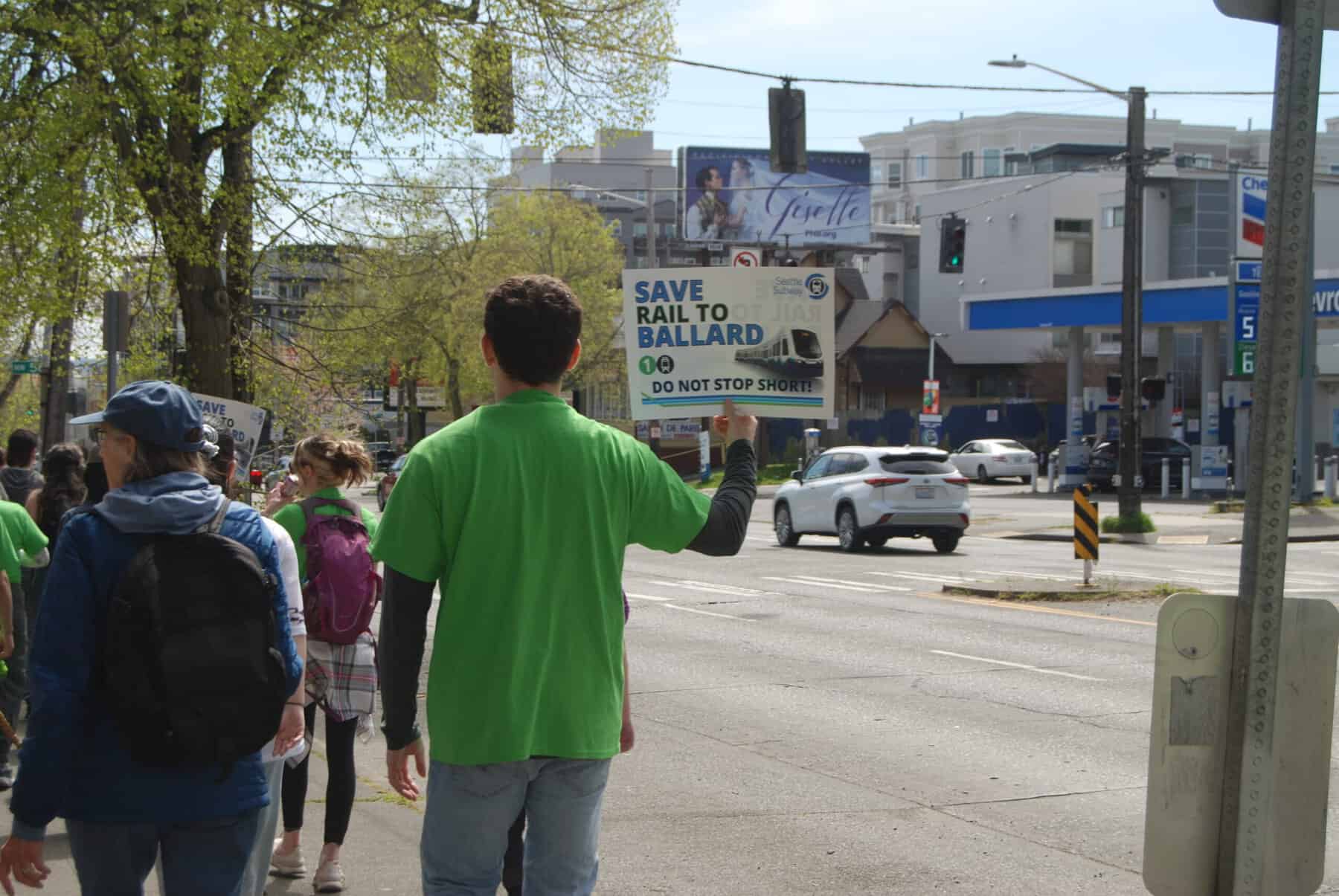
Photos: Elizah Lourdes Rendorio