
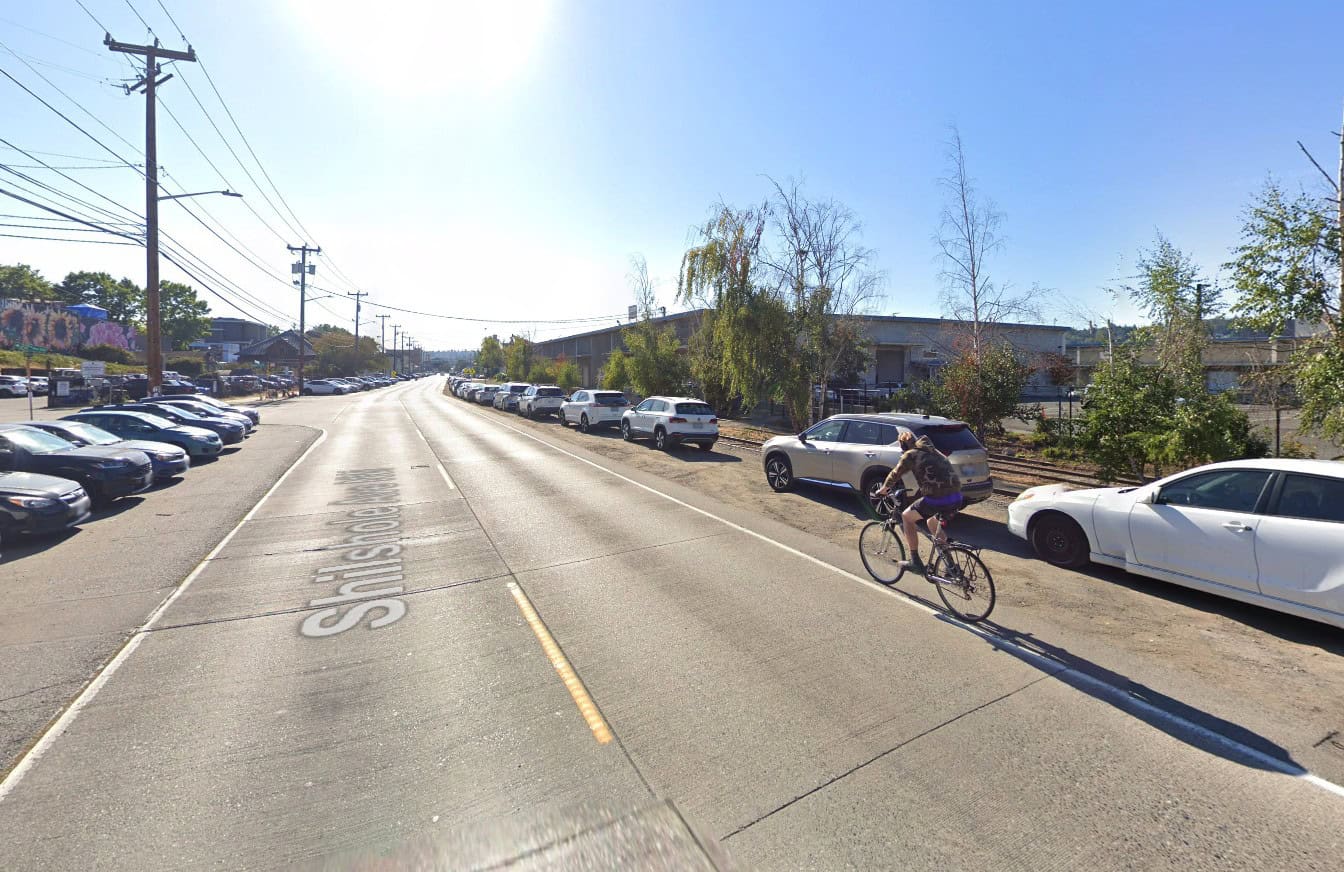
A Washington state appeals court has ruled that Seattle’s 2021 redesign of the Burke-Gilman Trail Missing Link along Shilshole Avenue NW is not exempt from environmental review, the latest decision in the long-running legal battle over the project.
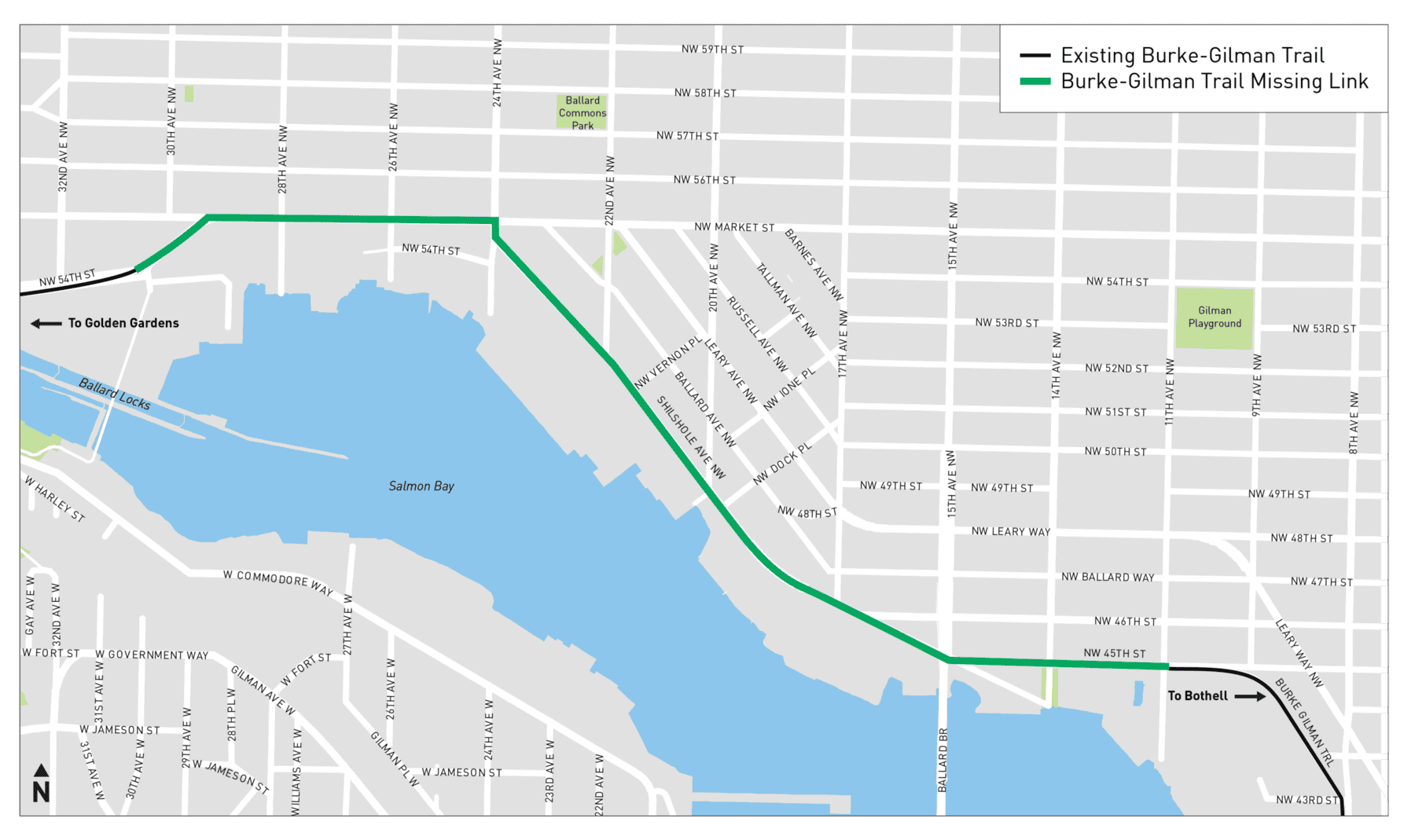
The ruling applies to the city’s scaled-back Shilshole Avenue alignment, which Seattle proposed in 2021 after earlier court challenges. It does not affect SDOT’s new proposal, unveiled this year, that would instead route the Missing Link primarily along Leary Way NW.
Earlier this year, state lawmakers also considered legislation that would have exempted the Missing Link project from additional environmental review, but the proposal did not become law.
In its latest ruling, the Court of Appeals agreed with the Shorelines Hearings Board and King County Superior Court that the city’s 2021 redesign must undergo environmental review under the State Environmental Policy Act (SEPA).
The Missing Link is the final 1.4-mile gap in the 28-mile Burke-Gilman Trail, connecting Golden Gardens Park to the Sammamish River Trail. The court noted that the project has been the subject of legal disputes since 2008.
According to the Washington Court of Appeals, Seattle redesigned the Shilshole proposal in 2021 to reduce the amount of land disturbed by the project, including narrowing the trail and removing some planned features. The city argued those changes qualified the project for an exemption from environmental review.
The appeals court disagreed, affirming the Shorelines Hearings Board’s conclusion that the redesigned project does not qualify for those exemptions and that the city must comply with SEPA if it moves forward with that version of the project.
The court also ruled that the coalition of labor groups, businesses and industrial organizations challenging the project had legal standing to bring the case, rejected arguments that the superior court lacked jurisdiction, and upheld the lower court’s order requiring the city to comply with SEPA.
The ruling does not address the merits of the trail’s design or determine where the Missing Link should ultimately be built. Instead, it focuses on whether the city’s 2021 Shilshole proposal qualified for an exemption from environmental review. Meanwhile, SDOT is continuing to develop a separate proposal that would shift the Missing Link primarily to Leary Way NW. That concept remains in the public outreach and design phase and is not affected by the court’s decision.
Unless the project changes again, the city must comply with SEPA before moving forward with the 2021 Shilshole proposal.
SDOT told My Ballard the City Attorney’s Office is analyzing the decision and working with City clients to consider next steps.
Photo: Google Image Capture