
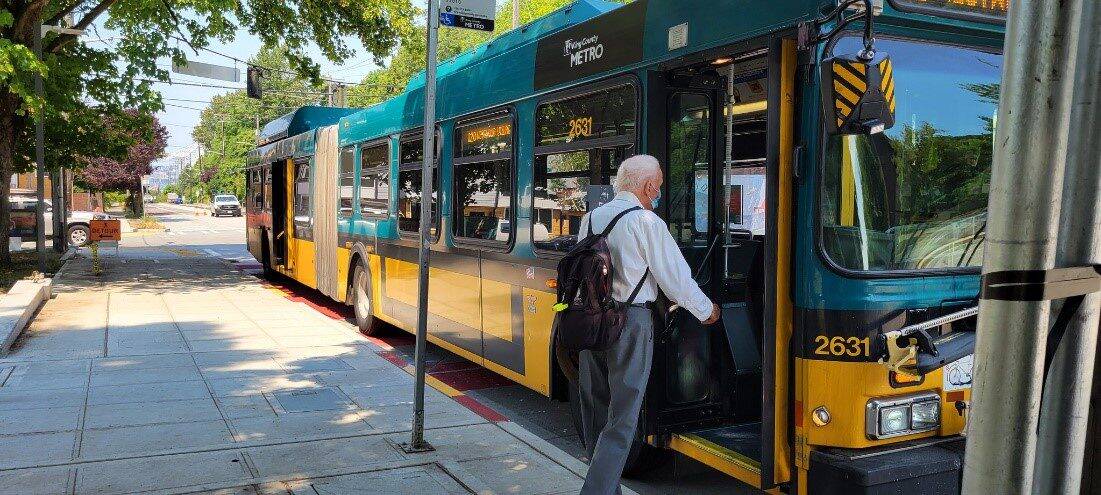
Ballard bus service could see changes under a funding measure headed to Seattle voters this November.
The measure includes two amendments proposed by Seattle City Councilmember Dan Strauss. One would prioritize faster bus connections between Ballard, downtown Seattle and light rail stations, while the other would require at least 75% of the measure’s funding to be spent on transit service. The Seattle City Council approved the measure Tuesday, sending it to the November ballot.
The first proposal, Amendment 10, prioritizes new, faster transit service connecting regional centers, including Ballard, to downtown Seattle and to light rail stations.
Strauss said Ballard’s designation as a regional center means it is expected to accommodate significant housing and job growth, making improved transit service an important part of that planning. He also said current bus trips between Ballard and downtown can take between 45 minutes and an hour, noting that Ballard has less direct bus service today than it did when the previous Seattle Transit Measure was approved in 2020. According to Strauss, the 15x and 18x bus routes have since been suspended, while the 17x has been significantly reduced.
The second proposal, Amendment 29, would require at least 75% of Seattle Transit Measure funding to be used for transit service. Strauss said the amendment is intended to ensure more of the measure’s funding goes toward purchasing transit service, compared with the 60% minimum included in the executive’s proposal.
The full Seattle City Council voted Tuesday unanimously to send the updated 2026 Seattle Transit Measure to the November ballot.
Strauss first introduced the amendments earlier this month, saying they were intended to improve bus connections between Ballard, downtown Seattle and light rail stations.
The focus on improving bus service comes as Ballard awaits progress on light rail. While the Sound Transit Board approved continued design work on the Ballard Link Extension in May, it delayed construction of the segment between Seattle Center and Market Street until additional funding is identified.
Photo: King County Metro