
The Ballard Roadside Raingardens pilot project has been a topic of conversation since they were installed last year. Whether you like them or not, it’s obvious that not all of them are working as designed – something Seattle Public Utilities is not taking lightly.
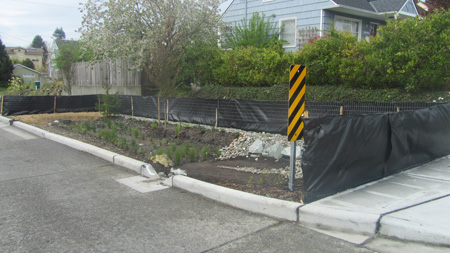
A look at one of the Ballard roadside raingardens
Back in February, the city met with neighbors of the raingardens to discuss what they are, why they’re there, how they’re supposed to work and to hear concerns. At that meeting, Seattle Public Utilities Deputy Director Nancy Ahern promised more communication. Since then, a Task Force comprising of members from the neighborhood and the city has been meeting.
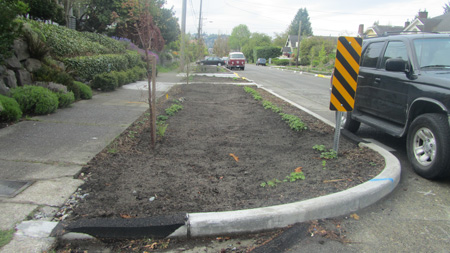
A look at one of the Ballard roadside raingardens
Today, a letter from Ahern was sent to neighbors discussing many of the concerns that are being addressed by SPU. The goal is to “close the loop with the larger project community,” Ahern tells us on a recent phone call.
From the letter, the concerns include:
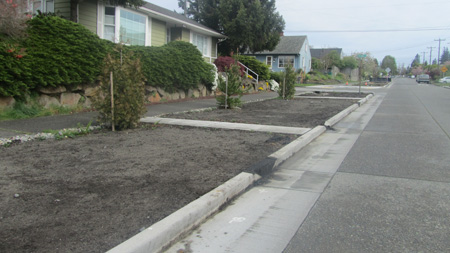
A look at one of the filled in roadside raingardens
“Since this was a pilot project and the concerns stated above were unexpected outcomes, SPU agreed to remove raingardens that were not working and/or that met with serious objection,” Ahern writes. Of the 50 raingardens installed in Ballard nearly two-thirds are working correctly or will be retrofitted, the other one-third will be removed. Ahern tells us that the changes will cost the city about $500,000. “It’s dearly paid for, but will pay off in the future,” Ahern says.
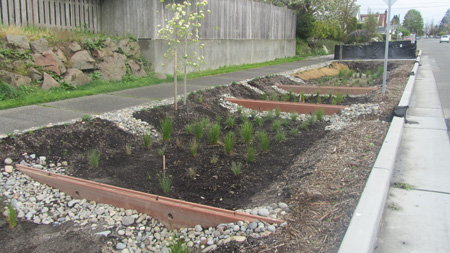
A look at one of the Ballard roadside raingardens
“Our experience with this pilot has been immensely valuable, and we are already taking advantage of the lessons learned from this project in our ongoing work with green infrastructure,” writes Ahern in the letter to the community.
As of right now, Ahern tells us they have no other roadside raingarden projects planned. “SPU is planning to take a year to gain experience from these designs before looking at possible roadside raingardens in other parts of Ballard or the rest of the city’s SCO basins,” she writes.
Click here (.pdf) to read the entire letter.